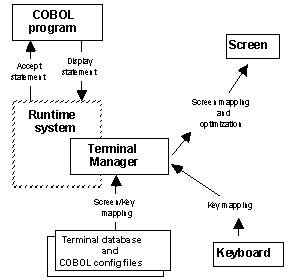
Many Terminal Manager functions depend on the data in two files:
* the "terminal database file," a text file that maps the screen and keyboard hardware signals used by many different types of terminals to common codes. The codes are called terminal function codes; those specifically related to keyboard signals are called key codes. The codes are used by the Terminal Manager to interpret keyboard input or generate display output. Some of the codes can also be used to customize terminal actions, as described throughout this section.
* the "runtime configuration file," a text file consisting of variables that help define how the screen, the keyboard, and the user's keystrokes are handled. These variables are often used in conjunction with the key codes mentioned above, and are described in detail later in this booklet.
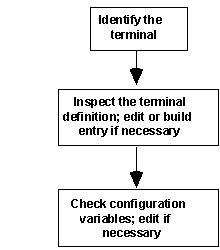
Before running a program that uses the Terminal Manager, the end user may need to identify the type of terminal that will be used, and may want to customize the interface. These are the necessary steps: