


5.13 Tab
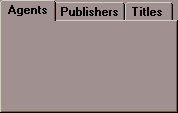
The TAB control combines a box with a tab for a control that looks like a file
folder. The user may click on any tab to bring it forward. The user may also
activate a particular tab by typing the key letter (the underscored letter in
the tab's text) in conjunction with the "Alt" key. You may define a tab's key
letter by placing an "&" in front of the intended key letter in the tab's text.
This appears as an underscored letter when the tab is displayed. For example,
DISPLAY TAB-CONTROL, TAB-TO-ADD = ("Tab&1", "Tab&2")
Creates a control with two tabs. The first tab has a key letter of "1" and
the second tab has a key letter of "2".
The program typically places different screen elements in the box depending on
the tab selected.
Portability note: The TAB control is available only for Windows 95/98, Windows NT Version 4.0,
and Windows 2000 32-bit runtimes. Any attempt to create a TAB control on other
systems fails, and the returned handle is NULL. Note that a future version of
ACUCOBOL-GT may support the TAB control on non-Windows systems; you should
write your code accordingly.
When a user clicks on a tab, the program is informed of the new selection and
the tab's appearance is updated. The behavioral distinction between tabs and
push buttons is that a tab responds immediately when clicked, and a push button
responds with the "clicked" event only when the mouse button is released. You
may allow the user to activate the tabs with the keyboard by accepting the TAB
control as any other control, but you need not do so if you wish to provide
only a mouse interface. (For a detailed description of TAB control events, see Chapter 6, "Events Reference.")
More:
Common Properties
Special Properties
Events